

For trucking and logistics companies, fuel is one of the largest and most closely monitored operating expenses. Yet most fleets focus almost exclusively on price per gallon, while overlooking another critical variable:
Fuel quality.
Even when fuel meets general specifications, small variations in fuel composition or contamination can have a measurable impact on engine performance, maintenance cycles, and overall fleet reliability. Over time, these effects translate into real—and often preventable—costs.

The Hidden Costs of Poor Fuel Quality
Fuel-related issues rarely present as immediate failures. Instead, they accumulate gradually, affecting performance and increasing operational expenses across the fleet.
1. Reduced Fuel Efficiency
Inconsistent or lower-quality fuel can lead to incomplete combustion, reducing overall engine efficiency. A modest drop of just 2–3% in fuel efficiency may seem minor, but across a fleet, this can result in:
- Thousands of dollars in additional fuel costs per vehicle annually
- Significant impact on total operating margins
For a fleet operating multiple Class 8 trucks, even a small reduction in fuel efficiency across thousands of miles per month can translate into substantial additional operating costs over the course of a year.
2. Increased Maintenance and Component Wear
Fuel that is off-spec or contains contaminants can contribute to:
- Carbon buildup
- Injector fouling
- Increased strain on engine components
The result is:
- Reduced component lifespan
- More frequent maintenance intervals
- Higher parts and labor costs
3. Unplanned Downtime
When fuel quality begins to affect engine performance, the consequences often extend beyond maintenance. Unplanned downtime can lead to:
- Missed delivery windows
- Operational disruptions
- Reduced fleet utilization
For logistics operations, even short periods of downtime can carry outsized financial and reputational impact.
4. Fuel Supply Variability and Risk
Fuel quality can vary between suppliers, regions, and even individual deliveries. In some cases, fuel may be:
- Improperly blended
- Degraded during storage or transport
- Inconsistent from load to load
Without a way to verify fuel quality, fleets are often operating on assumption rather than verified data.
Why Fuel Quality Is Difficult to Monitor
Unlike fuel price or volume, fuel quality is not immediately visible. Most fleets rely on:
- Supplier consistency
- Occasional lab testing
- Performance symptoms after issues arise
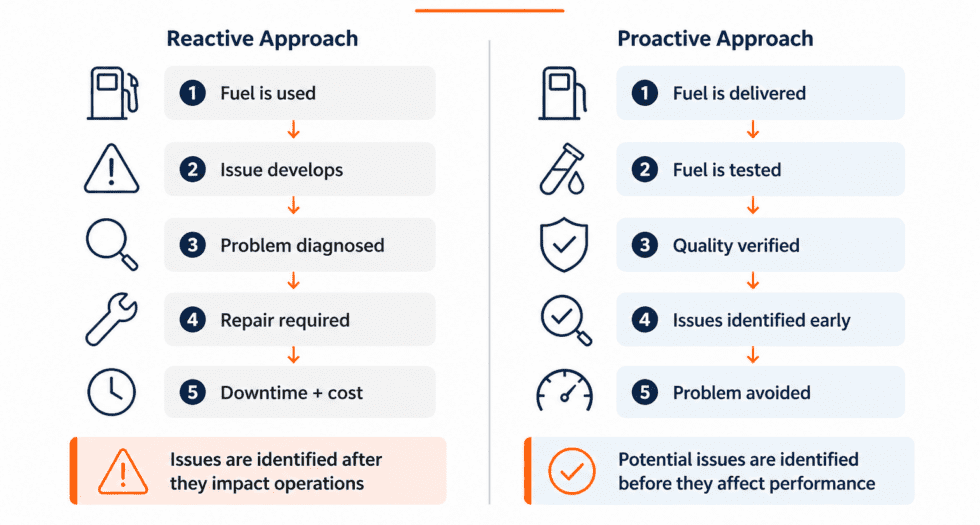
By the time a problem is detected through engine performance or maintenance trends, the associated costs have already been incurred.
A Shift Toward Proactive Fuel Verification
To address these challenges, some fleet operators are adopting a more proactive approach: verifying fuel quality before it enters the fleet. This approach allows teams to:
- Identify inconsistencies early
- Compare fuel sources objectively
- Prevent avoidable maintenance issues
- Make more informed purchasing decisions
Where Field Testing Fits into Fleet Operations
Advances in portable fuel analysis now make it possible to test fuel directly in the field—without relying solely on laboratory testing. Fuel can be evaluated:
- At the pump before fueling
- At storage tanks or depots
- During or immediately after delivery
With rapid results, operators can make immediate decisions rather than reacting after problems occur. Solutions such as Zeltex portable fuel analyzers are designed specifically for this type of field use, providing fast, on-site insight into fuel quality without the delays associated with lab testing.
The Bottom Line
Fuel quality is not just a technical consideration—it is a financial and operational variable that directly affects fleet performance.
By taking a more proactive approach to fuel verification, trucking companies can:
- Reduce avoidable fuel-related costs
- Improve reliability and uptime
- Gain greater control over fuel-related risk
In an industry where margins are closely monitored, fuel verification is becoming as important as fuel procurement itself.
Want to evaluate whether fuel quality may be affecting your fleet?
Download our quick checklist: “Fuel Quality Checklist for Fleet Operators.”